Back to Blog
AI Training

Python for AI — Best Language to Start With (2026)

· Updated
Vinod Patil, Solutions Architect & AI Trainer at Archer InfotechVinod Patil~ 9 min read
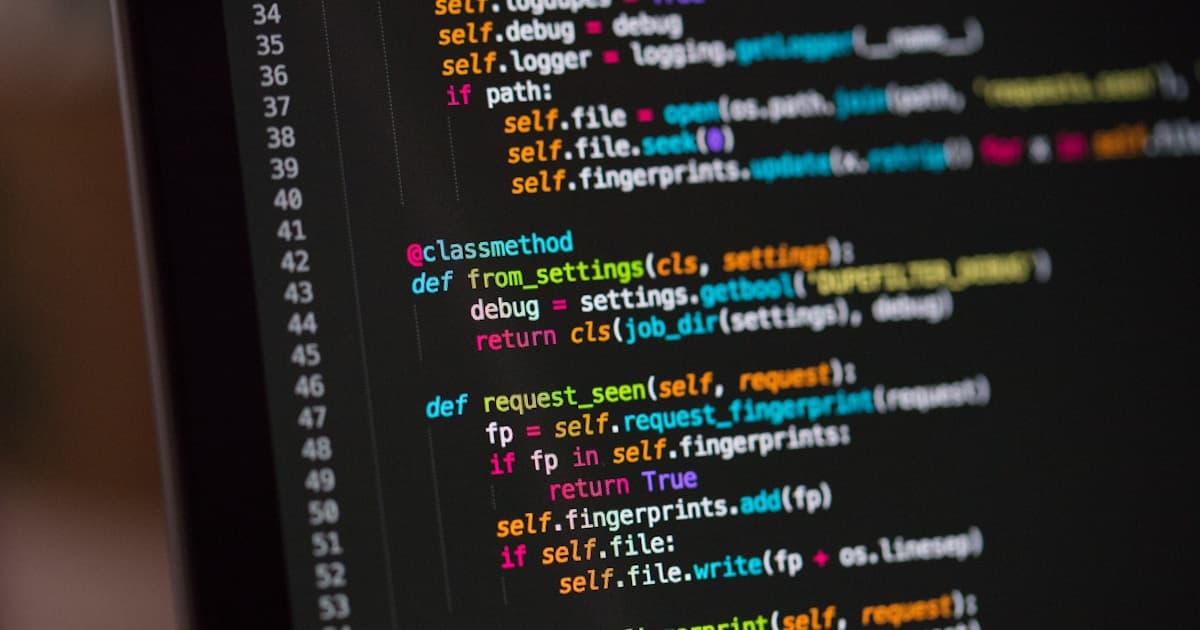
Featured image for Python for AI — Best Language to Start With (2026) — AI Training guide on the Archer Infotech blog, written by Archer Infotech

Why Python is the best first language for AI / GenAI / Data careers in 2026 — ecosystem reasons, which Python skills matter most, 5-month learning plan, and how skill level maps to hiring tier.

If you're starting on the AI / GenAI / Data career path in 2026, Python is the single best first language — not because it's the most elegant or the fastest, but because it has the deepest production AI ecosystem, the strongest learning resources, and the highest hiring leverage at every career stage. This guide explains why Python wins for AI work, which Python skills matter most in 2026, and how to build proficiency efficiently for Pune AI / Data interviews.

The short answer

  • Python is the right first language for 95%+ of AI / GenAI / ML / Data work
  • Other languages (JS/TS, Java, Rust, Go) have specific niches but should come after Python proficiency, not before
  • R is meaningful only for specific statistical research roles; Python covers all production data science
  • SQL is the second-most-important language for AI work — see SQL for AI + Data Careers

Why Python dominates AI work in 2026

Reason 1 — The library ecosystem

Every major production AI tool is Python-first:

  • LLM application frameworks — LangChain, LlamaIndex, Pydantic AI, DSPy
  • Model training — PyTorch, Hugging Face Transformers, TensorFlow
  • Fine-tuning — Unsloth, PEFT, TRL, Axolotl
  • Classical ML — scikit-learn, XGBoost, LightGBM
  • Data manipulation — pandas, polars, NumPy
  • Visualisation — matplotlib, seaborn, plotly
  • Vector databases — Pinecone, Weaviate, Chroma all ship Python-first clients
  • LLM observability — LangSmith, Helicone, Weights & Biases
  • Deployment — FastAPI, Streamlit, Modal, Replicate

If you try to do production AI work in any other language, you're swimming upstream against the ecosystem.

Reason 2 — Hugging Face Hub

Hugging Face hosts 1M+ open-source models, datasets, and demos. The whole ecosystem assumes Python. Tutorials, papers' reference implementations, fine-tuning scripts, evaluation harnesses — all Python. Trying to participate in the open-source AI ecosystem without Python is functionally impossible.

Reason 3 — Research-to-production handoff

Every research paper releases reference code in Python (PyTorch typically). Production AI engineers need to read this code to understand techniques and adapt them. Working in another language adds a translation friction tax to every adaptation.

Reason 4 — Hiring leverage

Every Pune AI / GenAI / ML / Data Engineering job description in 2026 lists Python as required. Listings for Java + classical ML or Go + AI exist but are <5% of the market. Python proficiency unlocks 95%+ of the opportunity surface.

Reason 5 — Learning curve + community

Python's readability + the size of the AI Python community means more high-quality tutorials, more community Q&A, more debugging help. Faster trajectory to proficiency than any alternative.

Which Python skills matter most for AI work in 2026

Tier 1 — non-negotiable

  • Core Python — variables, control flow, functions, classes, error handling, context managers, decorators
  • List comprehensions + generators — pythonic data transformation patterns
  • Standard libraryos, pathlib, json, csv, re, collections, itertools, functools, datetime
  • Type hints + Pydantic — modern Python is increasingly typed; Pydantic powers most LLM frameworks
  • Virtual environments + dependency management — venv, uv, poetry
  • Testing — pytest fundamentals + fixtures
  • Async Pythonasyncio, aiohttp, httpx for LLM API calls in production
  • FastAPI — for backend services around LLM apps
  • Logging + observability — structured logging, correlation IDs, basic OpenTelemetry
  • Pandas / Polars — tabular data manipulation
  • NumPy — array operations + numerical computing fundamentals

Tier 3 — for specific tracks

  • PyTorch — required for ML Engineer / Research track
  • Hugging Face Transformers — required for fine-tuning + custom model work
  • LangChain / LlamaIndex — required for LLM application track
  • scikit-learn + XGBoost — required for Data Science / classical ML track
  • Streamlit / Gradio — quick demo + prototyping skills

What about Java / JS-TS / Go / Rust for AI?

Java

  • Niche: Spring Boot backends that integrate LLM features via REST APIs
  • Hiring leverage: meaningful at enterprise companies (BFSI, telecom) where Java is the dominant backend stack
  • AI ecosystem: minimal native Java AI tooling; most Java AI projects call out to Python services
  • Recommendation: learn Python first; if you're committed to backend engineering, add Java in year 2 for backend integration work

JavaScript / TypeScript

  • Niche: full-stack AI applications (Next.js + Vercel AI SDK + LLM API integration)
  • Hiring leverage: strong for product-focused AI Engineers building end-user products
  • AI ecosystem: growing — Vercel AI SDK, LangChain.js, Anthropic + OpenAI SDKs in TS
  • Recommendation: learn Python first for the AI fundamentals + production patterns; add TypeScript for full-stack delivery

Go

  • Niche: high-performance LLM serving infrastructure, AI platform engineering, MCP servers
  • Hiring leverage: rising at AI Platform / MLOps roles
  • AI ecosystem: small but growing (mostly platform-layer tools)
  • Recommendation: learn Python first; add Go if you specialise in AI platform / MLOps

Rust

  • Niche: high-performance ML inference libraries (Candle, Hugging Face Candle), vector DB engines
  • Hiring leverage: very small but premium-paying (specialised research labs, infrastructure roles)
  • AI ecosystem: very small, mostly research-focused
  • Recommendation: ignore for AI work unless you specifically target ML infrastructure roles

How to build Python proficiency efficiently

Month 1 — fundamentals (40 hours)

  • Core Python syntax + data structures
  • List comprehensions + functions + classes
  • Standard library essentials (json, os, pathlib, re, collections)
  • pytest basics
  • Build: a CLI tool that processes data files (CSV / JSON)

Month 2 — applied data + APIs (40 hours)

  • pandas + NumPy basics
  • Requests + httpx
  • FastAPI basics
  • Pydantic
  • Build: a small REST API + a data analysis notebook on a public dataset

Month 3 — production patterns (40 hours)

  • Async Python + concurrent patterns
  • Error handling + retries + structured logging
  • Virtual environments + dependency management (poetry / uv)
  • Testing + CI basics
  • Build: a deployed FastAPI service with tests + CI

Month 4 — LLM application stack (40 hours)

  • LangChain basics
  • OpenAI / Anthropic SDK
  • Vector DB integration (pgvector / Chroma)
  • Streamlit / Gradio for quick demos
  • Build: a RAG-based Q&A app on a domain you care about

Month 5+ — specialise

  • ML Engineer track → PyTorch + Hugging Face Transformers
  • Data Scientist track → scikit-learn + statistical libraries
  • AI Engineer track → LangGraph + production LLM ops

Common Python mistakes that hurt AI candidates

Mistake 1 — Only knowing Jupyter notebooks

Notebook-only Python skills don't transfer to production. You must be comfortable writing + structuring + testing standalone Python modules.

Mistake 2 — Avoiding type hints

Modern AI code is heavily typed. Pydantic powers most LLM frameworks. Skipping type hints means you'll struggle to read or contribute to the ecosystem.

Mistake 3 — Not learning async

Production LLM apps are async by default — multiple concurrent LLM calls, streaming responses, parallel tool execution. Sync-only Python skills cap your production AI work.

Mistake 4 — Skipping pytest

Untested AI code doesn't ship to production. Production AI engineering interviews routinely ask "show me your test suite" — and "I didn't write tests" is an instant fail signal.

Mistake 5 — Weak SQL fundamentals

Python without SQL is half a data career. SQL is the second-most-important language for AI work. See SQL for AI + Data Careers.

How Python skill levels map to hiring tiers

Level Time invested Hiring tier you target
Beginner <100 hours Internship / shadow learner
Intermediate 100-300 hours Fresher Data Analyst / Junior Engineer
Solid 300-600 hours Fresher AI / Data Engineer / DS
Advanced 600-1500 hours Mid-level AI Engineer / DS / ML Engineer
Expert 1500+ hours Senior AI Engineer / Architect

A focused 4-6 months of structured learning + project building (~300-600 hours) gets most freshers to "Solid" — the hiring sweet spot.

Frequently asked questions

Can I become an AI Engineer without learning Python? Practically no — Python is the foundational language of production AI work. Avoiding it caps your opportunity surface at <5% of the AI hiring market.

What about learning JavaScript/TypeScript first? Acceptable if your career target is full-stack AI Engineer at product companies that ship Next.js apps. But Python should still come within 6 months of starting JS/TS.

Is R worth learning for AI / Data work? Only for specific academic / statistical research roles. Production AI work is Python-first; R is a niche path.

How do I practice Python efficiently? Code every day for 4-6 months. Build 3-5 projects that progress from CLI → API → deployed service → AI-powered app. Don't get stuck in tutorial-watching mode.

What's the typical Pune AI fresher salary requiring strong Python? ₹6-12 LPA for AI / GenAI Engineer. ₹5-9 LPA for Data Scientist. ₹6-11 LPA for Data Engineer. See Pune IT Salary Guide 2026.

Where can I learn Python in the context of AI? Our Generative AI training and Data Science classes cover Python in production-AI context with hands-on labs.


For role-selection guidance, see AI Engineer vs Data Scientist for Freshers. For SQL fundamentals, see SQL for AI + Data Careers. For project portfolios, see 5 Generative AI Projects to Add to Your Resume and End-to-End AI Project Ideas for Freshers. For Pune AI hiring outlook, see AI Classes in Pune for Freshers — Skills That Matter Most.

Pune IT careers — monthly briefing

One email a month with the most actionable Pune IT hiring + salary updates. Free.

One email per month. No spam. Unsubscribe anytime.

Ready to Start Learning?

Explore our industry-leading IT courses and take the next step in your career with Archer Infotech.